Framer Alternatives: 4 AI Website Builders in 2026
Summary
Looking for framer alternatives? We compared Webflow, Wegic, 10Web, and Durable against Framer on pricing, AI build flow, CMS depth, and code ownership. Wegic wins on raw speed for a first site, Webflow and 10Web pull ahead once a site needs a real CMS, and Durable bundles a CRM. None of the four match Framer's canvas control.
Framer alternatives get searched for one recurring reason: someone hit the 10-collection CMS ceiling on Framer's Pro plan, or needed a plugin ecosystem Framer doesn't have. We tested Webflow, Wegic, 10Web, and Durable against Framer on five measurable points. Wegic wins for the fastest path to a live site; Webflow and 10Web win once the site needs real content depth.
Why people go looking for a Framer alternative
Framer's freeform canvas and AI agent are genuinely good at what they do: a designer can go from prompt to a visually distinctive, editable site in an afternoon. The friction shows up later. Basic and Pro plans cap CMS collections at 2 and 10 respectively, add-on fees kick in past that, and there's no plugin or extension ecosystem to lean on for anything Framer's core editor doesn't cover natively. That's the gap the four tools below fill in different ways.
How we compared these four tools
Each product's homepage and pricing page were reviewed directly, and we cross-checked the pricing tiers quoted below against the vendor's own pricing page at time of writing (pricing on AI tools moves fast, verify before you commit). Customer-satisfaction context came from aggregated G2, Capterra, and Trustpilot review scores rather than a single source: Framer sits at 4.5/5 on G2 across 142 reviews, Webflow at 4.4/5 on G2 across 975 reviews, 10Web between 4.4 and 4.6/5 on G2 with a stronger 4.6-4.7/5 on Trustpilot from over 2,200 reviews, and Durable at 4.8/5 on Trustpilot. Wegic's public review volume is thin (a handful of Trustpilot reviews, around 25 on Product Hunt), which is reflected in a more conservative score below rather than an inflated one.
What Wegic gets right that Framer doesn't
Wegic strips the interface down to a chat box. You describe the site, it builds and republishes on every message, and there's no editor menu to learn first. In our reading of user reports, a working site typically goes live in under 10 minutes, which is the fastest of the four. The tradeoff is depth: no real CMS beyond page-by-page chat edits, shallow design customization next to a code-based tool, and SEO controls that stay basic compared to WordPress or Webflow. For a freelancer or a first-time small-business owner who needs a site this week and doesn't want to learn an editor, that tradeoff is the right one. For anything with real content volume, it isn't.
Where Webflow and 10Web pull ahead
Webflow keeps Framer's visual-first approach but backs it with a native CMS: collections, filtering, and a REST API for dynamic content, plus code output that's clean, standards-based HTML and CSS rather than a locked canvas. The cost is a steeper learning curve (box-model thinking, not freeform dragging) and CMS or hosting fees that climb quickly on the Premium and Team tiers.
10Web takes a different route entirely: it generates a full WordPress build from a prompt, a cloned URL, or a Figma file, then hosts it on Google Cloud with automated backups and a 90+ PageSpeed target baked in. Because the output is a real WordPress install, it inherits WordPress's plugin ecosystem and any custom post type a site needs, at the cost of the update and plugin-conflict overhead that comes with WordPress itself. For a WordPress shop evaluating AI generation without abandoning the platform its client sites already run on, 10Web is the closest match to what Framer's AI agent does, just staying inside WordPress instead of a closed canvas.
Where Durable fits if you want more than a website
Durable generates copy, layout, logo, and images from a single prompt in under a minute, then bundles the result with CRM, invoicing, booking, and AI-driven marketing tools in one subscription. It posted the highest satisfaction score of the five tools we checked (4.8/5 on Trustpilot), and Durable reports over 3,000,000 businesses built on the platform. It's a hosted, closed-canvas builder: no code export, and design customization stays limited to what the templates allow. Best suited to a solo founder who wants a website plus the operational tools around it in one login, not a design-forward marketing site.
The honest picture
None of these four match Framer's canvas control for a designer who wants to hand-place every element. What they offer instead is a faster, cheaper, or more integrated path to a working site, and which one wins depends entirely on whether the job is "get something live today" (Wegic), "build a client site with a real CMS" (Webflow or 10Web, depending on whether WordPress is already in play), or "get a website plus the back-office tools that come with running a small business" (Durable).
If a client asks for something outside WordPress this week, which of these four would you actually hand them the login for?
At-a-glance
| Webflow | Wegic | 10Web | Durable | |
|---|---|---|---|---|
| Starting price | Free tier; Basic $15/mo; CMS plan $25/mo (billed yearly) | Free tier (1 site); Basic ~$9/mo; Pro ~$29/mo | From $10/mo billed yearly, 100 AI credits included | Free tier; Launch ~$22/mo; Grow ~$41/mo |
| AI build flow | Manual visual editor; AI assistant limited to sections and copy | Pure chat: describe the site, AI rebuilds it on every message | Prompt, URL clone, or Figma import generates a full WordPress build | One prompt generates copy, layout, logo, and images in under a minute |
| CMS depth | Full CMS: collections, filtering, and a REST API | No dedicated CMS; edits happen through chat, one page at a time | Native WordPress CMS, any plugin or custom post type | Built-in blog only, 10 to 32 posts a month by plan |
| Code ownership | Exports clean semantic HTML and CSS; dynamic collections don't export | Hosted only; no code export, no self-hosting option | Full WordPress install; exportable and movable to any host | Hosted only; closed platform, no code export |
| Best fit | Agencies building content-heavy or e-commerce client sites | Non-technical owners who need a live site in minutes | WordPress shops that want AI generation without leaving WordPress | Solo founders who want a site plus CRM and invoicing in one login |
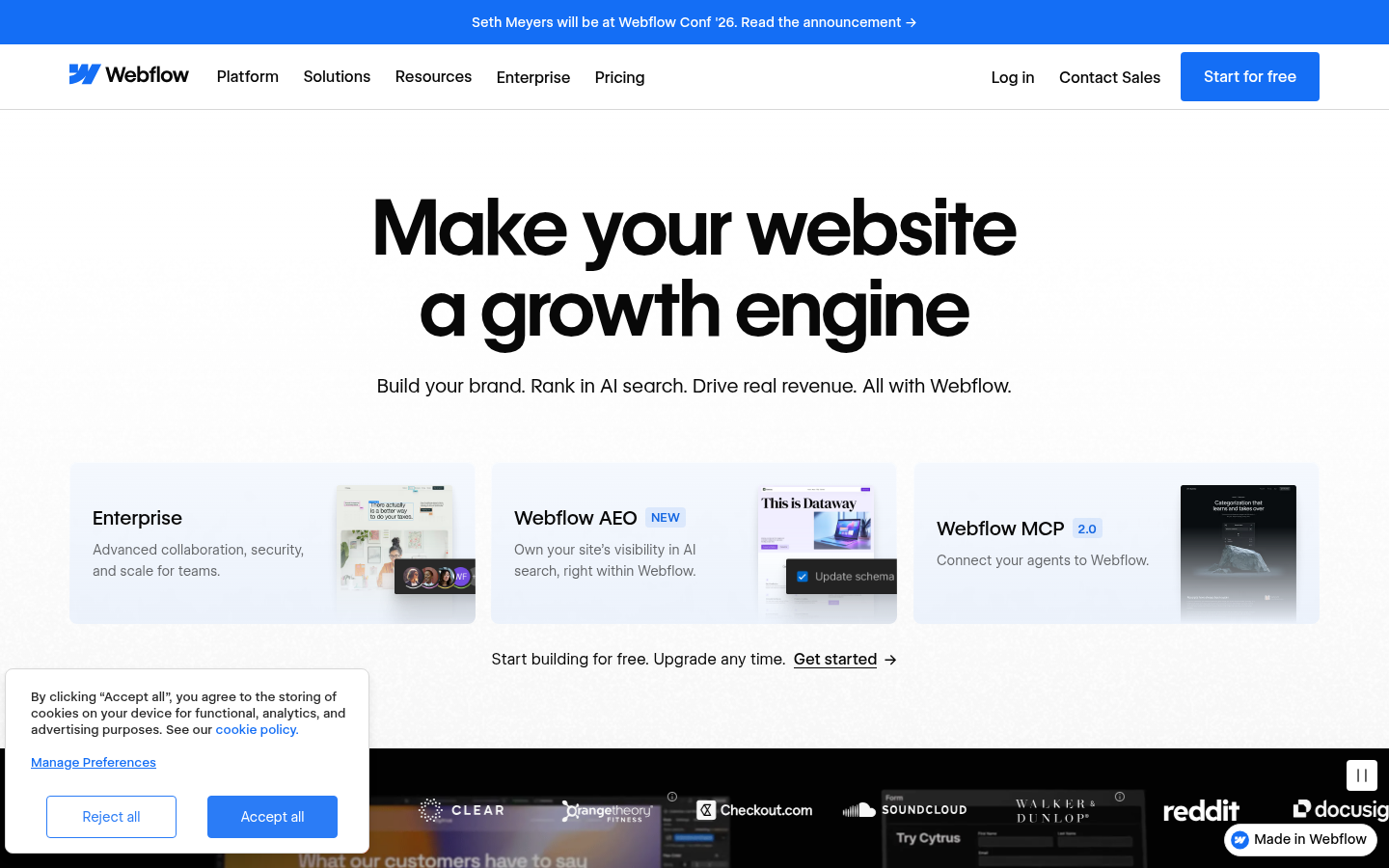
Webflow
- Exports clean, standards-based HTML and CSS instead of a locked canvas
- Native CMS with collections, filtering, and a REST API for real data
- Scales to large content or e-commerce sites without leaving the platform
- Staging environments and client seats built for agency workflows
- Box-model thinking brings a real learning curve versus chat-first tools
- CMS and hosting costs climb quickly once you hit Premium or Team tiers
Best pick when a client site needs a real CMS and long-term scale, not just a fast launch.
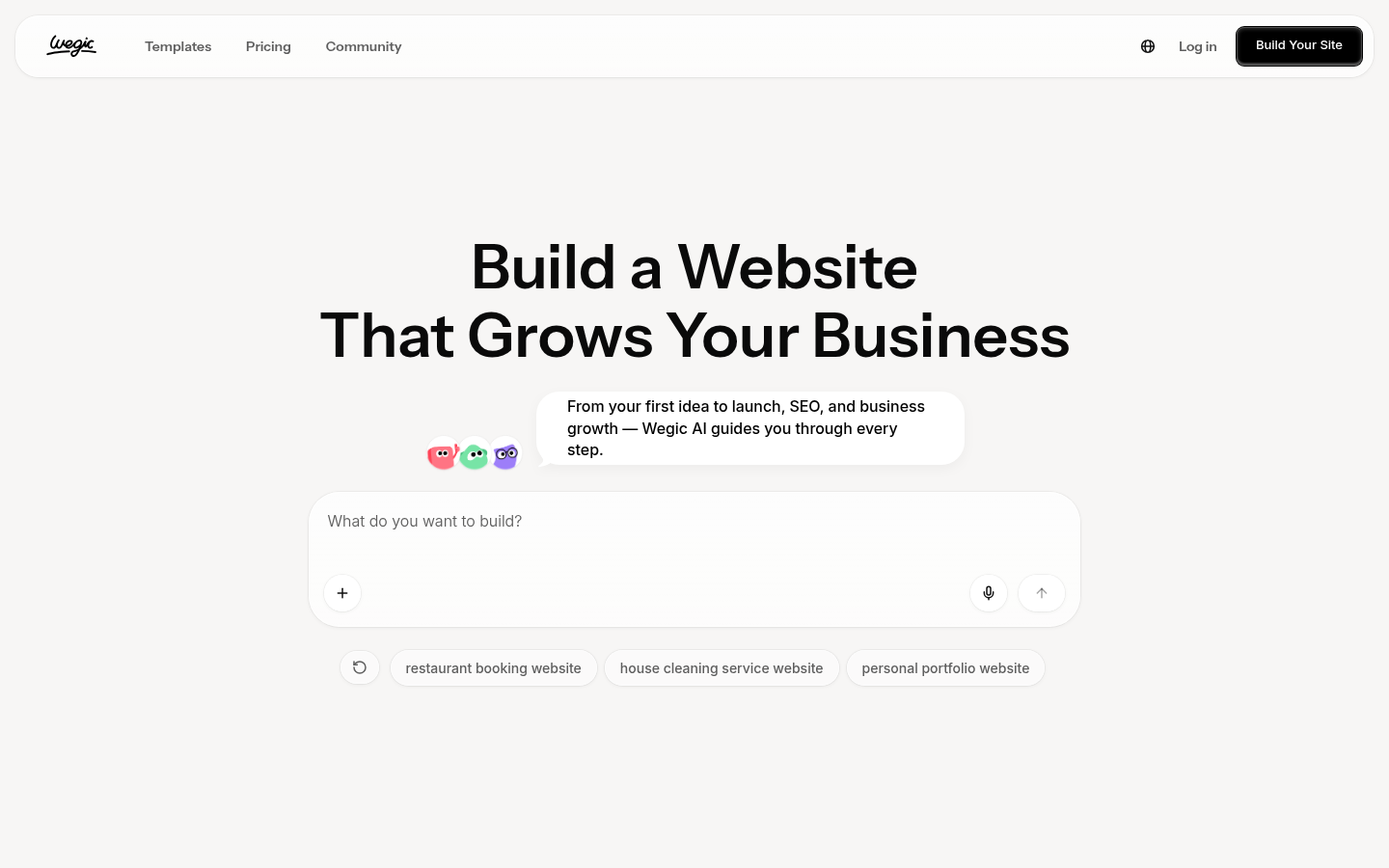
Wegic
- Chat-only interface: no editor to learn, describe the site and it builds
- A functional site typically publishes in under 10 minutes end to end
- Iterative edits happen in plain language, no menus to hunt through
- Lowest entry price of the four alternatives, with a genuine free tier
- Design customization stays shallow next to code-based tools like Webflow
- Not built for complex e-commerce or highly dynamic pages
- SEO controls are basic compared to WordPress or Webflow
The fastest of the four to a working site, best suited to a first website rather than a complex one.
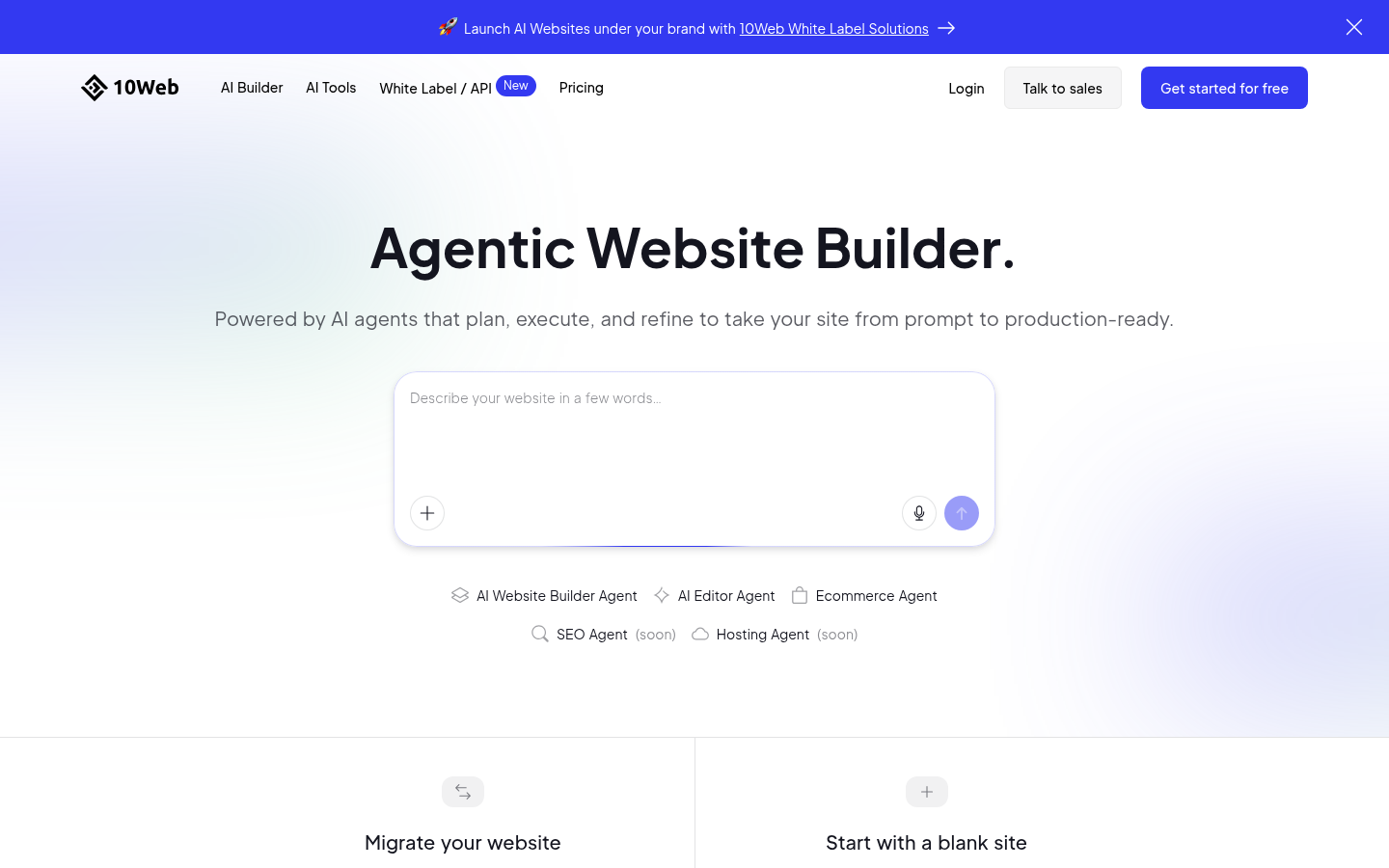
10Web
- Generates a full WordPress build from a prompt, URL clone, or Figma file
- Runs on Google Cloud hosting with automated backups and free SSL
- Elementor-based editor plus an AI Co-Pilot for manual refinement after the AI pass
- White-label reseller dashboard makes it workable for agencies managing many sites
- Entry plan caps you at 100 AI credits and one site per month
- Still inherits WordPress's plugin-conflict and update-maintenance overhead
The closest match to Framer's AI-first build flow for teams that need to stay on WordPress.
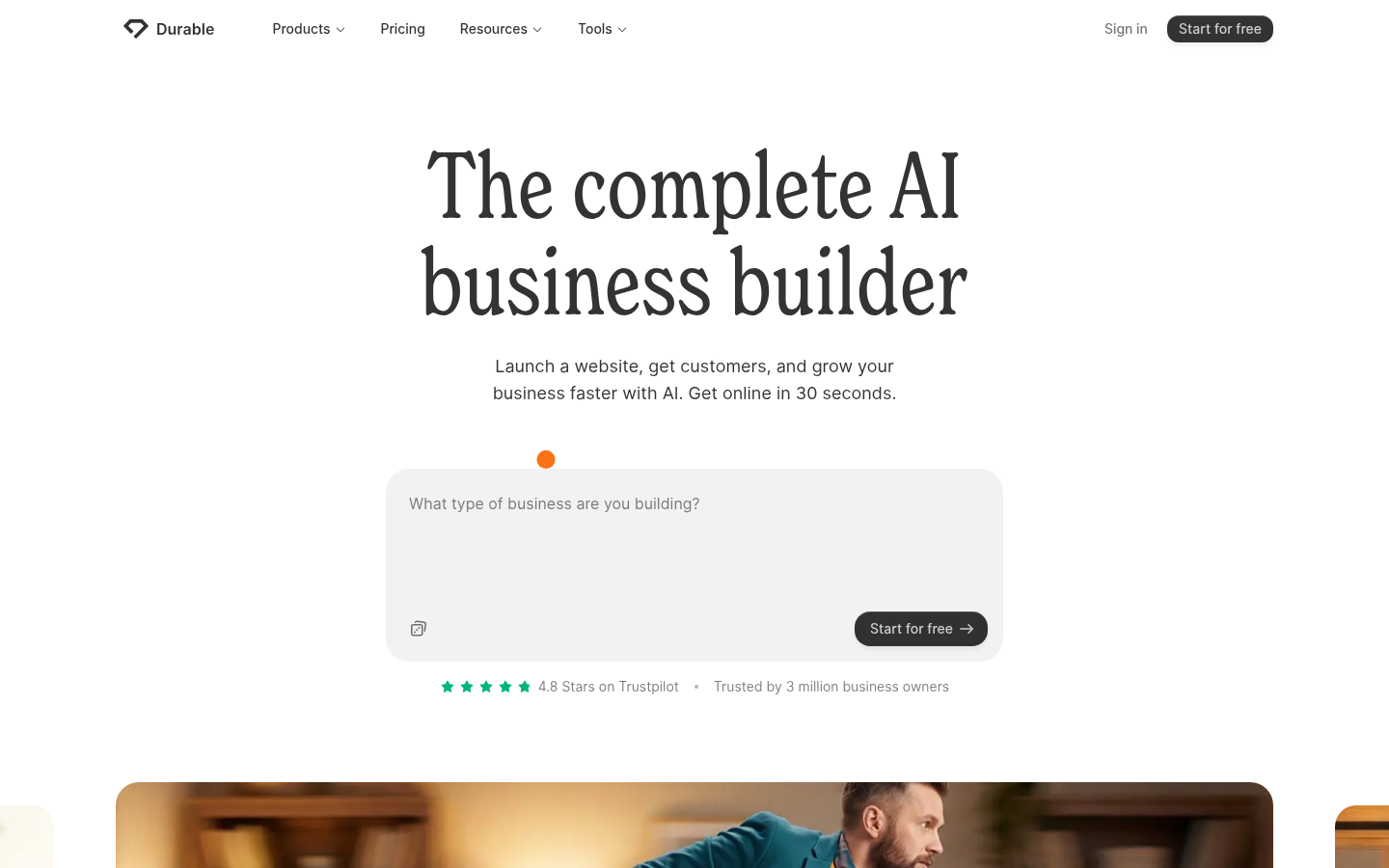
Durable
- Generates a full site including copy, logo, and images in under a minute
- CRM, invoicing, and booking come bundled into the same subscription
- Reports over 3,000,000 businesses built on the platform to date
- Highest aggregated satisfaction score of the five tools we checked
- Design customization stays limited to what the generated templates allow
- Blog post allowance is capped by plan, 10 to 32 posts a month
- Hosted only, with no code export if you want to leave the platform
Best-reviewed of the five for pure satisfaction, but it's a closed, hosted platform end to end.
Verdict
Wegic is our pick among the four for the specific job of getting a first site live fast without learning an editor. If the site needs a real CMS or design control that survives scale, Webflow or 10Web score higher on our criteria, and 10Web is the natural fit if the client is already on WordPress.
How we tested
We reviewed each product's own homepage and pricing page directly (screenshots captured August 2026) rather than relying on secondhand summaries, and cross-referenced the pricing tiers quoted in this piece against the vendor's live pricing page. Customer-satisfaction context is pulled from aggregated G2, Capterra, and Trustpilot scores rather than a single platform: Framer 4.5/5 on G2 (142 reviews), Webflow 4.4/5 on G2 (975 reviews) and 4.5/5 on Capterra, 10Web 4.4-4.6/5 on G2 and 4.6-4.7/5 on Trustpilot (2,200+ reviews), Durable 4.8/5 on Trustpilot, and Wegic a mixed, low-volume record (Trustpilot and roughly 25 Product Hunt reviews) that we scored conservatively rather than rounding up. Pricing, review counts, and feature claims should be reverified before a purchase decision since AI website builders change plans and limits often.